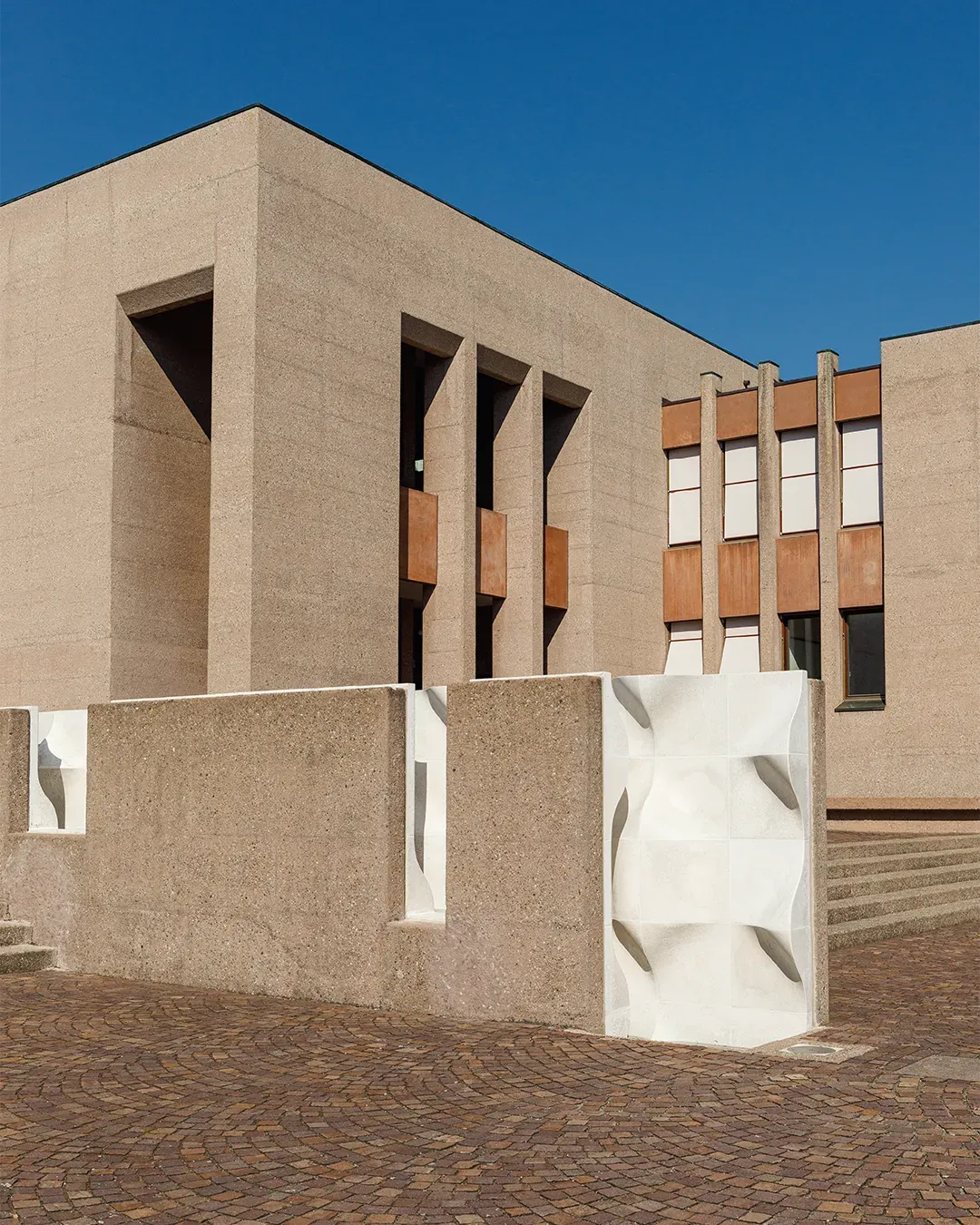
PMS Kreuzlingen, Esther + Rudolf Guyer, Swiss brutalist icon, © Karin Bürki/Heartbrut. Explore more on Heartbrut.com

PMS Kreuzlingen

Une forteresse du désert nord-africain rencontre l'esthétique pop art des années 60 dans ce complexe scolaire brutaliste pionnier conçu par le couple d'architectes suisses Esther et Rudolf Guyer.
Image de Words & images: Karin Bürki

Words & images: Karin Bürki

This concrete oasis can be found in the Swiss border town of Kreuzlingen – with Germany and Lake Constance just a stone’s throw away. It is best visited on a hot summer’s day, when the architecture dissolves into dazzling abstractions on the surface of the central pool and harsh shadows add geometric edge and drama to the three large yet pared-down school buildings. They are arranged around the main piazza, which provides an open stage for student life. The earthy adobe tones are reminiscent of fortified cities in North Africa, while the street lamps and two fountains reference the era’s fashion for pop art and space- age design. To achieve this distinctive look, the architects developed a bespoke type of clay-pigmented concrete and used a bush-hammered finish.

Widely regarded as one of the most important brutalist schools in Switzerland, PMS Kreuzlingen inspired many similar designs in the 1970s. A recent revamp keeps the teaching college top of class.

The classrooms were originally located in a former Baroque monastery. However, by the 1960s, it had reached capacity and monastic discipline and order were at odds with progressive teaching methods. With their extension built on the hillside below the monastery, the Guyers managed to strike a balance between tradition and the progressive zeitgeist. However, the architect couple got stuck halfway through when it came to the interiors. While the main wing is characterised by brightness and sober objectivity, the music wing exudes the typical church vibes from that era, with subdued lighting, massive wall art, dark wooden features, clinker floors and rust tones. Strategically placed lighting and radiators pick up on the orange theme from the exterior, creating a much needed clash and a fresh, futuristic feel.
But then things suddenly take a slightly psychedelic turn. Classrooms are named ‘Place of Irony’, ‘Place of Irrationality’ or the more sober ‘Cold’. The lessons of brutalist architecture never fail to expand the mind.
Fait inhabituel pour une structure brutaliste, le PMS Kreuzlingen reçoit régulièrement les meilleures notes des étudiants et du personnel.